Q: |
What
are some safety precautions to keep in mind? |
A: |
Improper
use of a power inverter could result in
personal injury. Keep the inverter free
from moisture as liquids conduct electricity,
which may lead to serious damage or injury!
Do not use the inverter near flammable materials
or where fumes or gases may accumulate.
The AC Output (neutral) wire should be ground,
except in special applications. |
Q: |
Is it possible to run an air conditioner
on power inverters? |
A: |
Yes,
it is possible to operate a air conditioner
in range using a higher-powered inverter
and battery bank with the right capacity
for power. Select an inverter and battery
combination that takes into account the
startup surge required by the air conditioner. |
Q: |
What
type of batteries should I use in my Inverter/Charger
installation? |
A: |
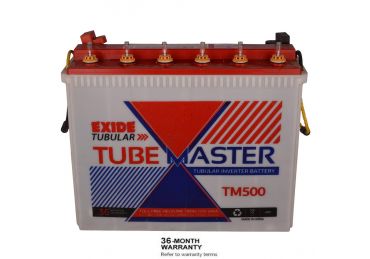
Digital
recommends using only high-quality deep
cycle batteries in Wet, Gel or AGM etc. |
Q: |
What
is the difference between Automotive and Deep
Cycle batteries ? |
A: |
Automotive
batteries are usually adequate for small
inverters, (< 500 Watts). Deep Cycle
(marine) batteries are best for larger inverters
as they are designed for several hundred
charge/discharge cycles. (Automotive batteries
wear out much more quickly after heavy discharge) |
Q: |
A: |
In
general you can connect almost any appliance
to an inverter, with a few practical exceptions.
While the inverter can easily supply a heavy
load like an electric heater, the battery
capacity is often too low to maintain the
supply for any great length of time. The
same applies to air conditioning units.
As long as the battery capacity is high
enough you can use a large inverter to run
a washing machine, a large single cooking
element or a small two-ring electric cooker. |
Q: |
Can
I use my inverter in parallel with the generator
or shore power? |
A: |
Definitely
not! If you have a generator on board or
a shore connection you must install a Masterswitch.
The switch is available with various applications,
but its main function is to switch automatically
and safely between shore, generator and
inverter power. |
Q: |
Can
I run a computer on the inverter? |
A: |
Yes,
you can. All Digital sine wave inverters can
easily and safely supply a computer. In
fact the output voltage from an inverter
is often better than that from the electricity
grid. A Digital inverter, combined with a
battery charger and a battery set, is often
used as a back-up system on shore in places
where the grid connection voltage is contaminated
or unreliable. |
Q: |
Can I
run a microwave on an inverter? |
A: |
Yes.
You can connect any model of microwave to
your inverter, but keep in mind that a 800
watt microwave consumes 1200 to 1300 watt
from the 230V system, so you must make sure
you choose the correct size inverter.
|
Q: |
How much
battery capacity do I need with an inverter? |
| A: |
As
a rule of thumb you can assume the minimum
battery capacity for a 12V installation
is about 20% of the inverter capacity. For
a 24V installation this would be 10%. In
other words the minimum battery capacity
for an AJ1000-12 is 160Ah.
|
Q: |
Are there
any appliances that cannot be run on an inverter? |
| A: |
In
general you can connect almost any appliance
to an inverter, with a few practical exceptions.
While the inverter can easily supply a heavy
load like an electric heater, the battery
capacity is often too low to maintain the
supply for any great length of time. The
same applies to air conditioning units.
As long as the battery capacity is high
enough you can use a large inverter to run
a washing machine, a large single cooking
element or a small two-ring electric cooker.
|
Q: |
How
much power does an inverter consume? |
| A: |
If
you connect a 850W coffee machine to a Studer
sine wave inverter, consumption will be
850W divided by the voltage of the electrical
system (12V) = 70 Amperes. Add another 8%
(100%-92% =8%) to this total for the inverter
consumption. The total power consumption
is then 70 Amperes + 6 Amperes = 76 Amperes.
Of course a coffee machine is only in use
for about 10 minutes so the actual Ampere
consumption is relatively low (76 x 10 min
= 13Ah).
|
|